
Structured Cabling Services
ZAJCO SA provides expert structured cabling services for robust and future-proof network infrastructures. From precise installation and implementation to ongoing maintenance and Annual Maintenance Contracts (AMC), we ensure reliable connectivity for businesses across Saudi Arabia, India, Qatar, and Oman.
Description
In the modern business landscape, your network is the backbone of your operations. A well-designed and meticulously installed structured cabling system is not just about wires; it’s the invisible yet vital foundation for all your digital communications, information technology, and smart low-current systems. At ZAJCO SA, we specialize in delivering smart, integrated, structured cabling solutions that ensure unparalleled performance, reliability, and scalability for businesses across Saudi Arabia, India, Qatar, and Oman.
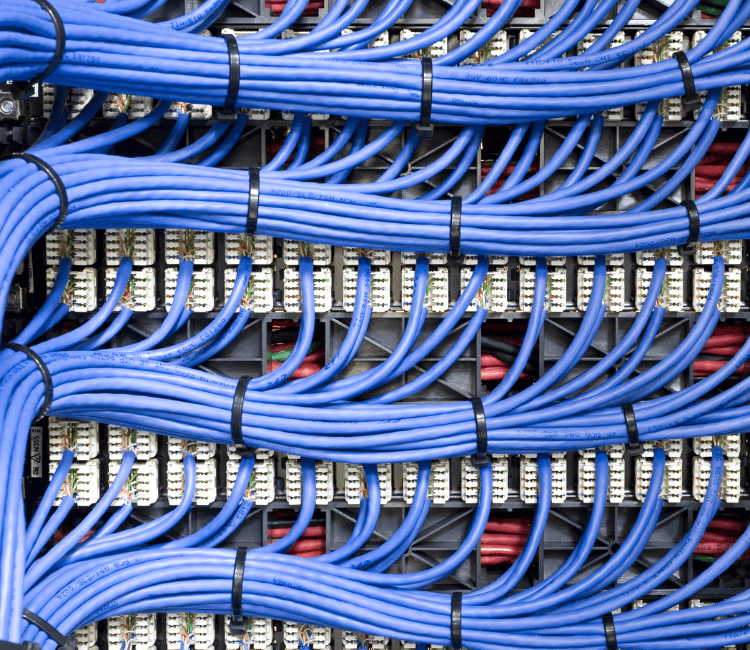
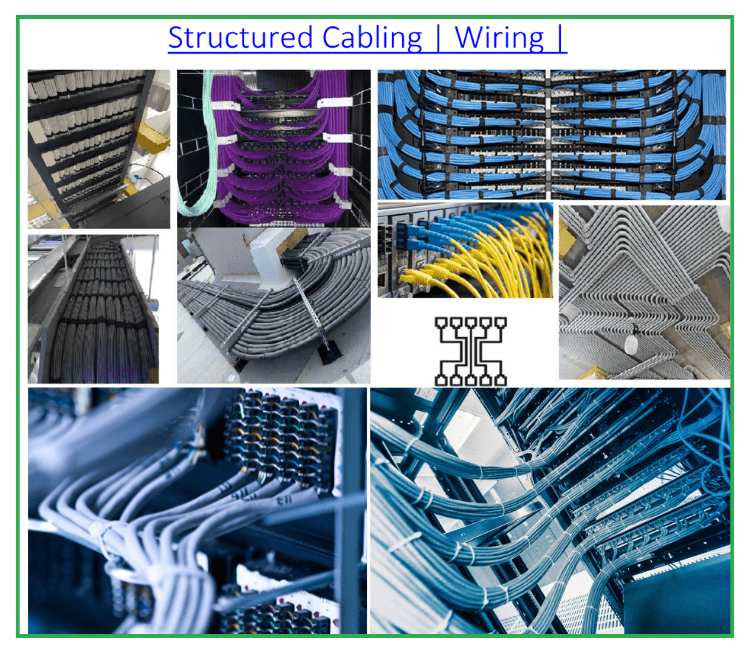
As illustrated by our meticulous work, a robust, structured cabling infrastructure is critical for:
- Reliable Connectivity: Ensuring uninterrupted data flow, clear voice communications, and seamless video conferencing.
- Future-Proofing Your Investment: A well-planned system can easily accommodate future technological advancements and expansions without costly recabling.
- Enhanced Performance: Minimizing signal degradation and maximizing network speed for optimal productivity.
- Simplified Management & Troubleshooting: Organized cabling (like the neat installations shown) reduces clutter, improves airflow, and makes fault isolation significantly easier.
- Supporting Integrated Solutions: Providing the necessary infrastructure for all your Low Current Systems, Information Technology, and even Electro-Mechanical Engineering controls to communicate effectively.
Our comprehensive structured cabling services encompass the entire lifecycle of your network infrastructure:
- Expert Installation & Wiring: Our certified technicians meticulously design and install high-quality copper and fiber optic cabling systems, adhering to international standards (e.g., TIA/EIA). We ensure professional routing, termination, and labeling, providing a clean, organized, and high-performing network foundation.
- Seamless Implementation: Beyond physical installation, we configure and test your entire network, ensuring all components work in perfect harmony with your existing IT infrastructure.
- Proactive Maintenance: Regular inspections, testing, and upkeep of your cabling infrastructure to prevent issues before they arise, ensuring consistent network performance.
- Comprehensive Annual Maintenance Contracts (AMC): Our AMCs offer scheduled preventative maintenance, priority support, and emergency services, guaranteeing the longevity and reliability of your critical network cabling for continuous business operations in KSA, India, Qatar, and Oman.
At ZAJCO SA, we understand that reliable infrastructure is the cornerstone of your business success. Our commitment to delivering smart, integrated solutions positions us as your trusted partner for all your cabling and low-current system needs.”
Know More about “Structured Cabling Services”:
- What is Structured Cabling?
Structured cabling is a standardized, organized approach to building a cabling infrastructure that supports a wide range of hardware uses, including data, voice, and video, ensuring high performance, reliability, and ease of management. - How does structured cabling differ from traditional or “point-to-point” cabling?
Traditional cabling is often a chaotic, ad-hoc collection of wires for each device. Structured cabling is a systematic, organized, and modular system that provides a comprehensive and standardized infrastructure, making it easier to manage, troubleshoot, and upgrade. - What are the primary benefits of implementing structured cabling for a business?
Key benefits include: increased speed and bandwidth, enhanced reliability and reduced downtime, greater flexibility and scalability for future growth, simplified maintenance and troubleshooting, cost-effectiveness over the long term, and improved aesthetics and safety. - What are the main components (subsystems) of a structured cabling system?
The six main subsystems are:- Entrance Facility: Where external telecom services enter the building.
- Equipment Room: Houses main communication equipment (servers, switches, patch panels).
- Backbone Cabling: Connects equipment rooms, telecommunications rooms, and entrance facilities.
- Telecommunications Room (TR) / Enclosure (TE): Connects backbone cabling to horizontal cabling.
- Horizontal Cabling: Connects the TR/TE to individual outlets in work areas.
- Work Area: Where end-user devices connect to the system.
- What types of cables are commonly used in structured cabling?
The most common types are:- Twisted Pair Copper Cables: (e.g., Cat5e, Cat6, Cat6a, Cat7, Cat8) for Ethernet networks over shorter distances.
- Fiber Optic Cables: For high-speed data networking and long-distance connections, especially between buildings or for high-bandwidth applications.
- Coaxial Cables: Less common for general data networks now, but still used for video surveillance (CCTV) and cable TV.
- What are the common industry standards for structured cabling?
Key standards are set by organizations like:- ANSI/TIA-568 series: (Telecommunications Industry Association) for commercial building cabling.
- ISO/IEC 11801: International standard for generic cabling for customer premises.
- CENELEC: European standards for cabling.
- How does structured cabling support future technologies (future-proofing)?
It’s designed with excess capacity and adherence to high bandwidth standards, allowing businesses to easily integrate new technologies (e.g., VoIP, Wi-Fi 6, IoT devices, cloud applications) without costly and disruptive re-cabling. - What is the typical process for a structured cabling installation?
The process generally involves:- Needs Assessment & Site Survey: Understanding current and future requirements.
- System Design: Creating a detailed layout and plan.
- Cabling Installation: Pulling cables, installing pathways (conduits, trays).
- Termination: Connecting cables to patch panels, outlets, and equipment.
- Testing & Certification: Verifying performance and compliance with standards.
- Labeling & Documentation: Clear labeling and comprehensive records for all components.
- Why is proper labeling and documentation important in structured cabling?
Clear labeling (of cables, ports, patch panels) and comprehensive documentation (floor plans, wiring diagrams) are critical for easy troubleshooting, efficient moves, adds, and changes (MACs), and long-term system management. - What are “patch panels” and their function?
Patch panels are centralized connection points where horizontal cables terminate. They provide an organized way to connect devices to network switches or other equipment using short “patch cords,” simplifying management and troubleshooting. - Can structured cabling improve network performance?
Yes, by using high-quality components, following standardized installation practices, and minimizing interference, structured cabling reduces data loss and signal degradation, leading to better network performance and reliability. - What role does structured cabling play in smart buildings and IoT?
It serves as the essential backbone for smart buildings, providing the reliable and high-bandwidth connectivity needed for a multitude of IoT devices, sensors, and automated systems to communicate effectively. - Is structured cabling necessary for Voice over IP (VoIP) systems?
Yes, structured cabling, particularly Cat5e or higher, provides the stable and high-quality network foundation required for clear and reliable VoIP communication, often allowing both voice and data to run over the same infrastructure. - What are the common challenges in structured cabling projects?
Challenges can include managing large-scale installations, ensuring compliance with evolving standards, integrating with legacy systems, minimizing disruption during installation, and ensuring proper airflow/cooling in equipment rooms. - Does ZAJCO SA.com provide maintenance services for structured cabling?
Reputable providers like ZAJCO SA.com typically offer ongoing maintenance contracts, including routine inspections, testing, and troubleshooting, to ensure the long-term performance and reliability of the cabling infrastructure. - What kind of components does ZAJCO SA.com supply for structured cabling?
Their offerings would likely include copper cables (Cat6, Cat6a, etc.), fiber optic cables, patch panels, patch cords, network cabinets, racks, cable management accessories, and connectivity hardware from leading brands. - Why should a business choose a professional structured cabling service provider like ZAJCO SA.com?
Professional providers ensure: adherence to industry standards and local regulations (e.g., in GCC), proper design for current and future needs, quality installation by certified technicians, comprehensive testing and certification, and reliable after-sales support. - Can structured cabling reduce downtime for a business?
Yes, the organized nature and robust design of structured cabling make it easier and faster to diagnose and resolve network issues, significantly reducing downtime and its associated costs. - How does structured cabling impact cybersecurity?
While not a direct cybersecurity measure, a well-organized, structured cabling system can enhance network security by making it easier to control physical access to network components, segment the network, and monitor traffic for anomalies. - Is structured cabling an investment or an expense?
Structured cabling is considered a strategic investment as it provides a long-term, scalable, and adaptable infrastructure that supports business growth, reduces operational costs, and ensures reliable communication for years to come.