

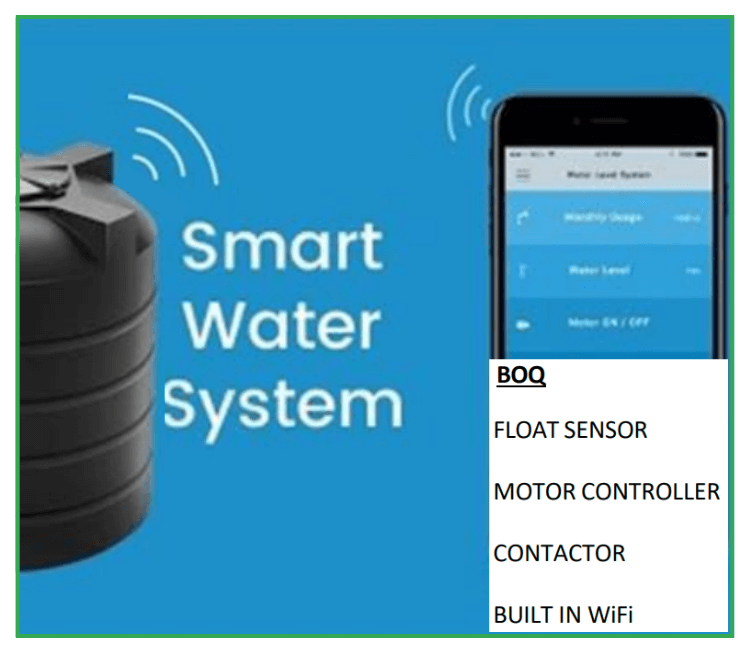
IoT Water Flow Management | Smart Water Conservation
ZAJCO SA provides advanced IoT Water Flow Management solutions that enable real-time monitoring, precise control, and intelligent conservation of water resources. We offer professional installation, implementation, ongoing maintenance, and Annual Maintenance Contracts (AMC) across Saudi Arabia, India, Qatar, and Oman.
Description
ZAJCO SA delivers cutting-edge IoT Water Flow Management solutions. Designed for commercial, industrial, and residential applications across Saudi Arabia, India, Qatar, and Oman, our intelligent systems provide unparalleled insights and control over your water consumption. Leveraging our expertise in Smart, Integrated Solutions across Information Technology, Electro Mechanical Engineering, and Low Current Systems, ZAJCO SA helps you achieve significant water savings, prevent costly leaks, and promote environmental sustainability.
Our comprehensive IoT Water Flow Management systems feature:
- Real-time Monitoring & Analytics: Gain instant visibility into water usage patterns, pressure, and flow rates through intuitive dashboards and detailed reports, enabling informed decision-making.
- Automated Leak Detection: High-precision sensors continuously monitor for abnormalities, instantly alerting you to leaks, bursts, or unusual consumption, minimizing water loss and property damage.
- Remote Control & Shut-off: Remotely manage valves and shut off the water supply in emergencies or for scheduled maintenance, providing immediate response capabilities from anywhere.
- Smart Metering Integration: Connect with smart water meters to gather accurate consumption data, enabling precise billing and identifying areas for efficiency improvements.
- Predictive Maintenance: Analyze historical data to predict potential system failures or maintenance needs, allowing for proactive intervention before issues escalate.
- Optimized Usage: Implement smart irrigation schedules based on weather data, or automate water flow for industrial processes, ensuring resources are used only when and where needed.
- Scalability: Our IoT solutions can be tailored for single buildings, large campuses, industrial facilities, or entire urban districts.
The benefits of implementing a ZAJCO SA IoT Water Flow Management system are extensive:
- Significant Water Conservation: Reduce wastage through leak detection, optimized usage, and intelligent automation.
- Substantial Cost Savings: Lower utility bills by minimizing consumption and preventing expensive water damage from leaks.
- Enhanced Operational Efficiency: Streamline water management processes, reduce manual checks, and enable faster response to incidents.
- Increased Sustainability: Contribute to environmental goals by actively managing and conserving precious water resources.
- Improved Asset Protection: Protect your infrastructure from water damage, extending the lifespan of pipes and equipment.
- Regulatory Compliance: Easily generate reports to meet water usage regulations and sustainability targets.
ZAJCO SA provides comprehensive, end-to-end services to ensure your IoT Water Flow Management System is flawlessly implemented and continuously performs at its peak:
- Expert Installation: Our certified engineers meticulously install IoT sensors, gateways, and control devices with precision.
- Seamless Implementation: We configure your system software, integrate it with existing infrastructure, and provide thorough training for your team.
- Proactive Maintenance: Regular checks, calibration, software updates, and system diagnostics ensure uninterrupted functionality and data accuracy.
- Comprehensive Annual Maintenance Contracts (AMC): Our AMCs offer dedicated support, rapid troubleshooting, and preventive servicing, guaranteeing the longevity and peak performance of your IoT water management investment across KSA, India, Qatar, and Oman.
Know more about “IoT Water Flow Management” :
- What is IoT Water Flow Management?
IoT (Internet of Things) Water Flow Management involves using smart sensors, meters, and connected devices to collect real-time data on water flow, consumption, pressure, and quality, transmitting this data over the internet to a central platform for analysis, monitoring, and automated control. - What are the primary benefits of implementing IoT Water Flow Management?
Key benefits include: significant water conservation, reduced water bills, early leak detection and prevention of water damage, optimized resource allocation, improved operational efficiency, real-time insights into water usage patterns, and enhanced sustainability efforts. - How does IoT Water Flow Management help with leak detection?
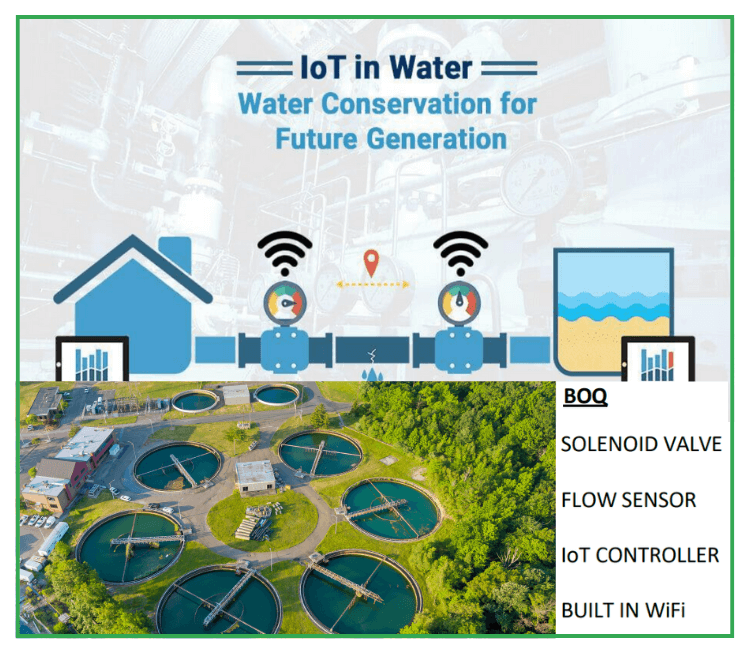
IoT systems continuously monitor water flow rates and pressure. Any abnormal patterns, sudden spikes in usage, or pressure drops can instantly trigger alerts, indicating a potential leak. Some advanced systems can even automatically shut off the water supply to prevent extensive damage. - What components are typically part of an IoT Water Flow Management system?
Common components include:- Smart Water Meters: Digital meters that measure water consumption and transmit data wirelessly (e.g., ultrasonic meters).
- Flow Sensors: Devices that detect water movement and volume.
- Leak Detectors: Sensors placed in vulnerable areas (e.g., under sinks, near pipes) to detect moisture.
- Pressure Sensors: To monitor water pressure in pipes and detect fluctuations.
- Smart Valves/Actuators: Remotely controllable valves to shut off or regulate water flow.
- IoT Gateways: Devices that collect data from sensors and send it to the cloud.
- Cloud Platform/Dashboard: Software for data storage, analysis, visualization, and user control.
- Mobile App/Web Interface: For users to monitor and manage the system.
- How does real-time monitoring work in an IoT Water Flow Management system?
Sensors constantly collect data (e.g., flow rate per minute, consumption per hour) and transmit it wirelessly (via Wi-Fi, LoRaWAN, NB-IoT, or cellular) to a cloud platform. Users can then view this data on a dynamic web dashboard or mobile app, getting immediate insights into water usage. - Can IoT Water Flow Management help reduce operational costs?
Yes, by precisely monitoring consumption, detecting leaks early (reducing repair costs and water waste), and optimizing water-intensive processes, businesses and properties can significantly lower their water bills and reduce maintenance expenses. - Is IoT Water Flow Management suitable for commercial buildings and facilities?
Absolutely. Commercial buildings, hotels, industrial facilities, and large complexes benefit immensely from these systems for monitoring overall consumption, sub-metering by floor or tenant, detecting leaks, and managing water-intensive operations. - How does an IoT system help with water conservation in large properties?
By providing granular data on where and how water is consumed, property managers can identify areas of high usage or waste, implement targeted conservation strategies, and automate controls (e.g., turning off water in vacant areas) to reduce overall consumption. - Can IoT Water Flow Management integrate with existing plumbing infrastructure?
Many IoT water meters and sensors are designed for easy integration with existing pipes and plumbing systems, often without requiring extensive modifications, making them suitable for both new constructions and retrofits. - What role does data analytics play in these systems?
Data analytics processes the vast amounts of information collected by sensors. It identifies usage patterns, detects anomalies (like continuous flow when no usage is expected), predicts potential issues, and generates reports that help in decision-making for water optimization. - What types of communication technologies are used in IoT Water Flow Management?
Common wireless communication technologies include Wi-Fi, LoRaWAN (Low-Power Wide-Area Network for long-range, low-data communication), NB-IoT (Narrowband IoT), and 3G/4G cellular, depending on the range and data requirements. - How does remote control of water flow work?
Some advanced systems integrate with electric shut-off valves (smart valves). This allows users to remotely turn off the water supply via their app or dashboard, or enables the system to automatically shut off the water if a major leak is detected. - Are these systems capable of monitoring water quality as well?
Yes, some comprehensive IoT water management systems include sensors for monitoring water quality parameters such as pH level, turbidity, temperature, and even the presence of certain contaminants. - What are the environmental benefits of IoT Water Flow Management?
By promoting significant water conservation and reducing waste, these systems contribute to a smaller environmental footprint, help preserve precious water resources, and align with global sustainability goals, which is particularly relevant in the GCC. - What kind of products or solutions does ZAJCO SA.com mention for IoT Water Flow Management?
While ZAJCO SA.com’s main page focuses on other security and automation products, an integrated systems provider would likely offer smart water meters (e.g., ultrasonic meters), leak detection sensors, smart valves, and a centralized IoT platform/dashboard for monitoring and control, often partnering with specialized manufacturers. (Based on typical offerings for the service). - How does IoT Water Flow Management aid in predictive maintenance?
By continuously monitoring parameters like pressure and flow, the system can detect subtle changes that indicate impending issues (e.g., a small leak turning into a burst pipe, or equipment wear). This allows for proactive maintenance before major failures occur, saving significant repair costs. - Can these systems provide detailed water consumption reports?
Yes, a key feature is the ability to generate detailed water performance reports, showing consumption trends over time (hourly, daily, monthly), identifying peak usage periods, and helping in budgeting and compliance. - Is an IoT Water Flow Management system customizable for different needs?
Yes, these systems are highly customizable. Users can configure alert thresholds, define specific monitoring zones (e.g., individual floors, specific equipment), and tailor dashboards to display the most relevant data for their operational needs. - What kind of support and maintenance is required for an IoT Water Flow Management system?
Ongoing support includes ensuring sensor accuracy, software updates, troubleshooting connectivity issues, and periodic checks of physical components. A reliable provider like ZAJCO SA.com would offer Annual Maintenance Contracts (AMCs) to ensure optimal performance. - Why choose a specialized provider like ZAJCO SA.com for IoT Water Flow Management?
Choosing a specialist ensures expertise in deploying IoT solutions in the local environment, compliance with specific regulations for water management and data handling, professional installation, access to reliable hardware and software, and responsive local support for continuous operation and maximizing water efficiency.
Partner with ZAJCO SA to embrace intelligent water management for a sustainable and cost-effective future.”