
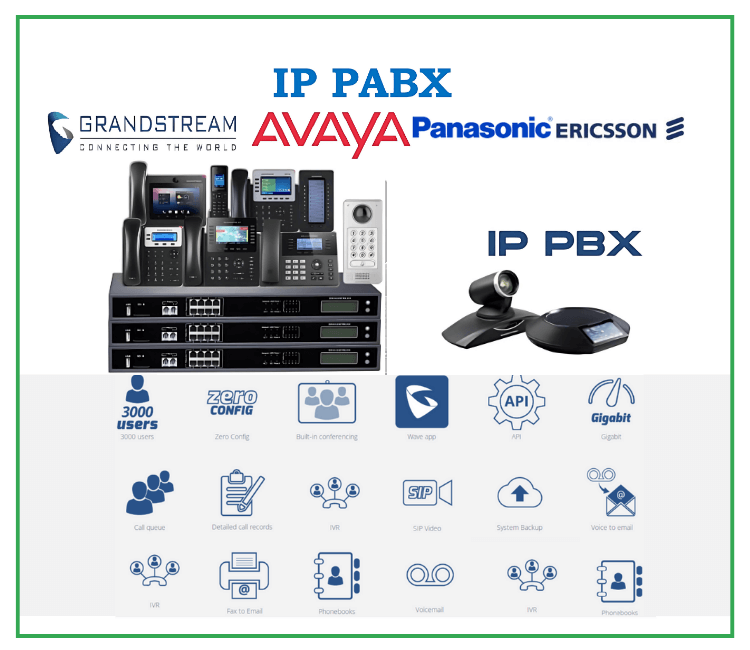
IP PBX Engineering Service
Reliable IP PBX system engineering for scalable, secure, and cost-effective business communication solutions.
Description
ZAJCO SA specializes in the engineering, installation, implementation, and maintenance of IP PBX (Internet Protocol Private Branch Exchange) systems for enterprises across Saudi Arabia, India, Qatar, and Oman. Our turnkey solutions cover everything from initial design and system integration to long-term Annual Maintenance Contracts (AMC), ensuring maximum uptime and communication efficiency.
We deploy advanced VoIP-based PBX systems that support multi-location calling, SIP trunking, unified communications, and cloud-ready features. Whether you’re upgrading a legacy system or implementing from scratch, ZAJCO ensures end-to-end support.
As part of our commitment to delivering smart, integrated solutions in Low Current Systems, Information Technology, and Electro-Mechanical Engineering, our IP PBX offerings reflect global standards with local expertise.
Our Services Include:
-
System Design & Network Planning
-
IP PBX Installation & Implementation
-
Integration with CRMs, ERPs & Call Centers
-
Maintenance & 24/7 Technical Support
-
Annual Maintenance Contracts (AMC)
-
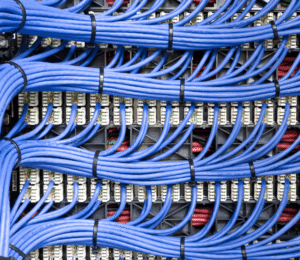
Structured Cabling & Device Configuration
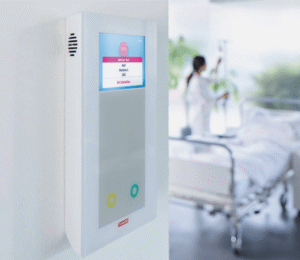
Ideal for: Hospitals, government buildings, schools, commercial towers, data centers & industrial facilities.
Know More About IP PBX Engineering:
-
What is an IP PBX?
An IP PBX (Internet Protocol Private Branch Exchange) is a business phone system that uses Internet Protocol (IP) to make and receive calls, facilitating both internal communication within an organization and external calls via the internet. -
How does an IP PBX work?
It converts analog voice signals into digital packets that are transmitted over an IP network (LAN or the internet). It acts as a central switching system, routing calls to various extensions or external lines. -
What is the role of “IP PBX Engineering”?
IP PBX engineering involves the planning, design, configuration, installation, optimization, and ongoing management of IP PBX systems to meet an organization’s specific communication needs. -
What are the key benefits of an IP PBX system?
Key benefits include cost savings (especially on long-distance calls), scalability, advanced features, easier management, improved call quality (HD voice), and integration with other business applications. -
How does an IP PBX save costs?
By using the internet for calls (VoIP), it eliminates the need for traditional phone lines (PSTN) and reduces long-distance charges, and internal calls are often free. -
What is the difference between an IP PBX and a traditional PBX?
A traditional PBX uses physical copper wiring and the Public Switched Telephone Network (PSTN), while an IP PBX uses internet technology (VoIP and SIP) for call routing and advanced features. -
What are the essential components of an IP PBX system?
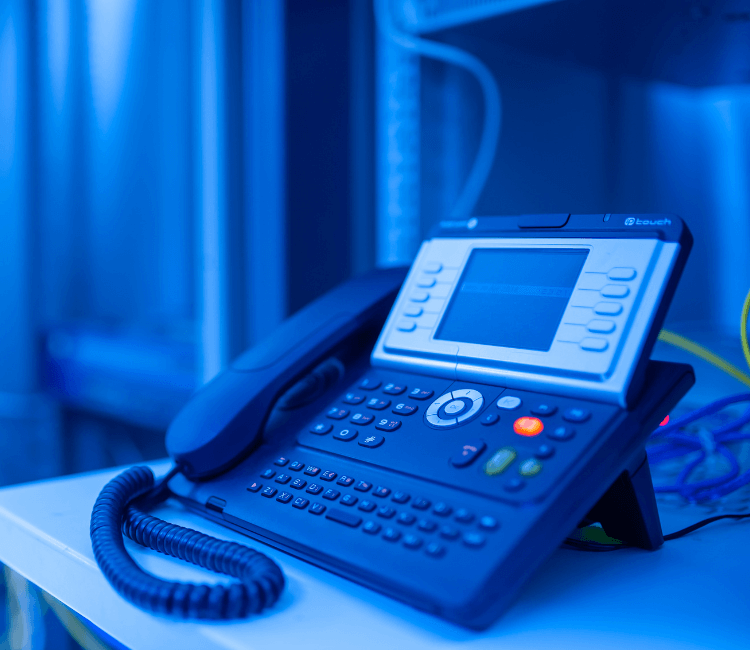
Typically, it includes an IP PBX server (hardware or software-based), IP phones (physical or softphones), a router, and a switch. SIP trunks are often used for external connectivity. -
What is VoIP in relation to IP PBX?
VoIP (Voice over Internet Protocol) is the technology that enables voice calls over the Internet. IP PBX systems utilize VoIP to transmit voice data. -
What is SIP trunking, and why is it important for IP PBX?
SIP (Session Initiation Protocol) trunking is a method of sending voice and other multimedia over an Internet connection. It allows an IP PBX to connect to the PSTN over the internet, essentially replacing traditional phone lines. -
Does IP PBX engineering involve network infrastructure planning?
Yes, successful IP PBX implementation requires proper network planning to ensure sufficient bandwidth, Quality of Service (QoS), and network security. -
What advanced features do IP PBX systems offer?
Features include advanced call routing, auto-attendant (IVR), voicemail-to-email, call recording, conference calling, call queues, call forwarding, and unified communications. -
Are IP PBX systems scalable for growing businesses?
Yes, IP PBX systems are highly scalable, allowing businesses to easily add or remove extensions and features without significant hardware changes. -
Can IP PBX support remote workers and multiple office locations?
Yes, one of the major advantages is its ability to seamlessly connect remote workers and different office locations, treating them as part of the same internal network. -
What are the security considerations in IP PBX engineering?
Security considerations include access control, content filtering, anti-ARP attack measures, built-in Session Border Controllers (SBC), and encryption protocols like TLS/SRTP. -
What is “Unified Communications” in the context of IP PBX?
Unified Communications (UC) integrates various communication methods like voice calls, video conferencing, instant messaging, email, and fax into a single, unified platform, often enabled by IP PBX. -
What types of IP PBX systems does ZAJCO SA.com offer?
ZAJCO SA.com appears to offer enterprise-level IP PBX systems, such as the IP PBX-3000, IP PBX-6000, and IP PBX-8000, suitable for small to large enterprises with varying user capacities (e.g., 100 to 1300 SIP users). -
Do ZAJCO SA.com’s IP PBX systems have router functions or advanced networking features?
Yes, some models like the IP PBX-8000 include router functions with high WAN port throughput and hardware QoS, indicating robust networking capabilities. -
What kind of support services does ZAJCO SA.com offer for IP PBX?
Based on their product page, they emphasize consultation with their professionals before purchase and customization of solutions for specific needs. -
What is the typical process for deploying an IP PBX system with a provider like ZAJCO SA.com?
The process often involves customization. -
Why should businesses consider an IP PBX solution from a provider like ZAJCO SA.com?
Businesses should consider it for enhanced call savings, HD voice quality, system security features (like built-in SBC, TLS/SRTP), support for mobile and remote workers, and tailored solutions for various enterprise sizes.